The PyPSA Handbook — Now Published


The PyPSA Handbook — Now Published Permalink
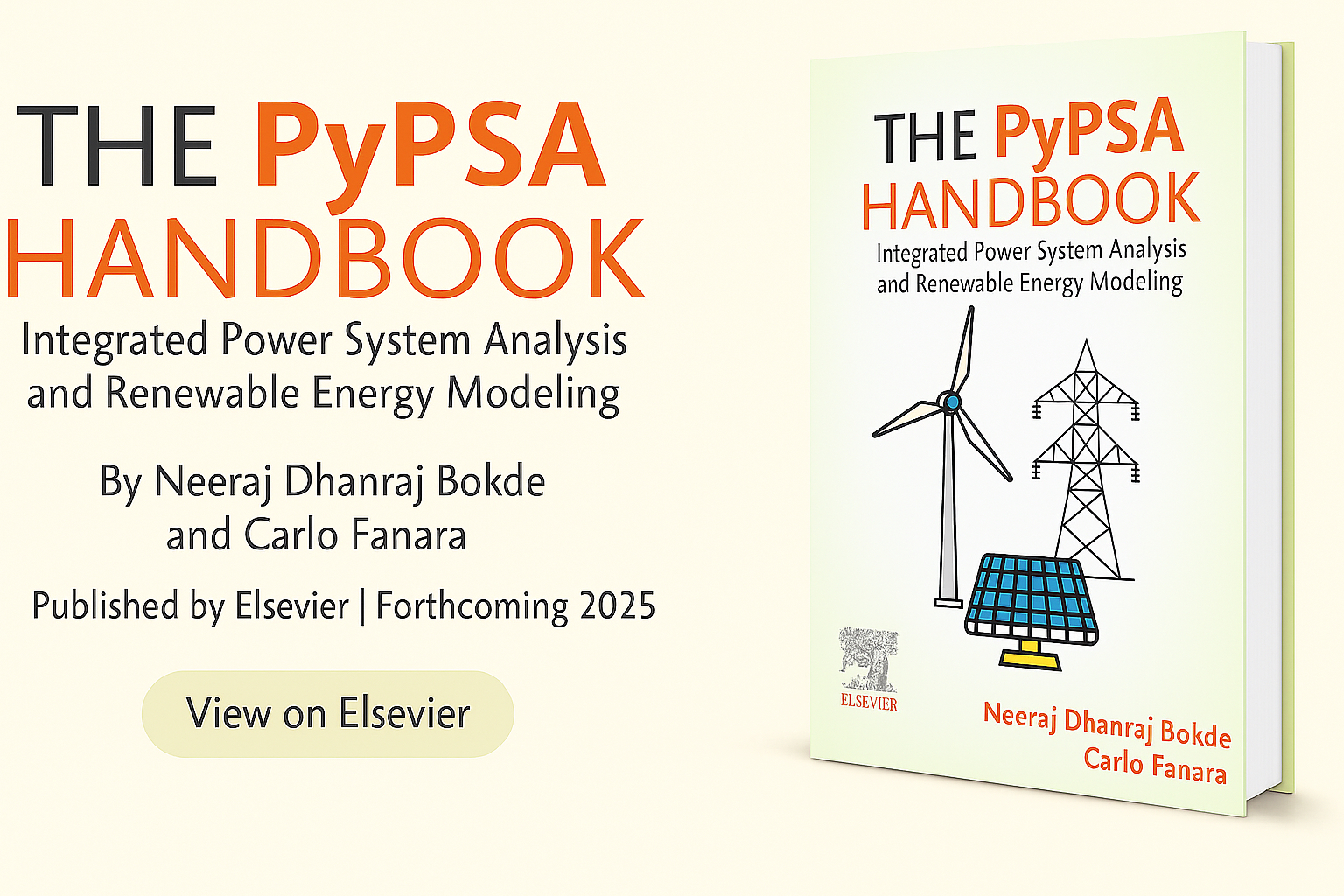
I am happy to share that The PyPSA Handbook: Integrated Power System Analysis and Renewable Energy Modeling, co-authored with Dr. Carlo Fanara, is now published by Elsevier and available worldwide. The book is the result of several years of work in the open-source energy system modeling space, with the aim of creating a resource that is practical, technically rigorous, and genuinely useful for both new and experienced users of PyPSA.
It brings together foundational concepts, modern modeling practices, and fully worked examples in a single, coherent reference for power system analysis and renewable energy planning.
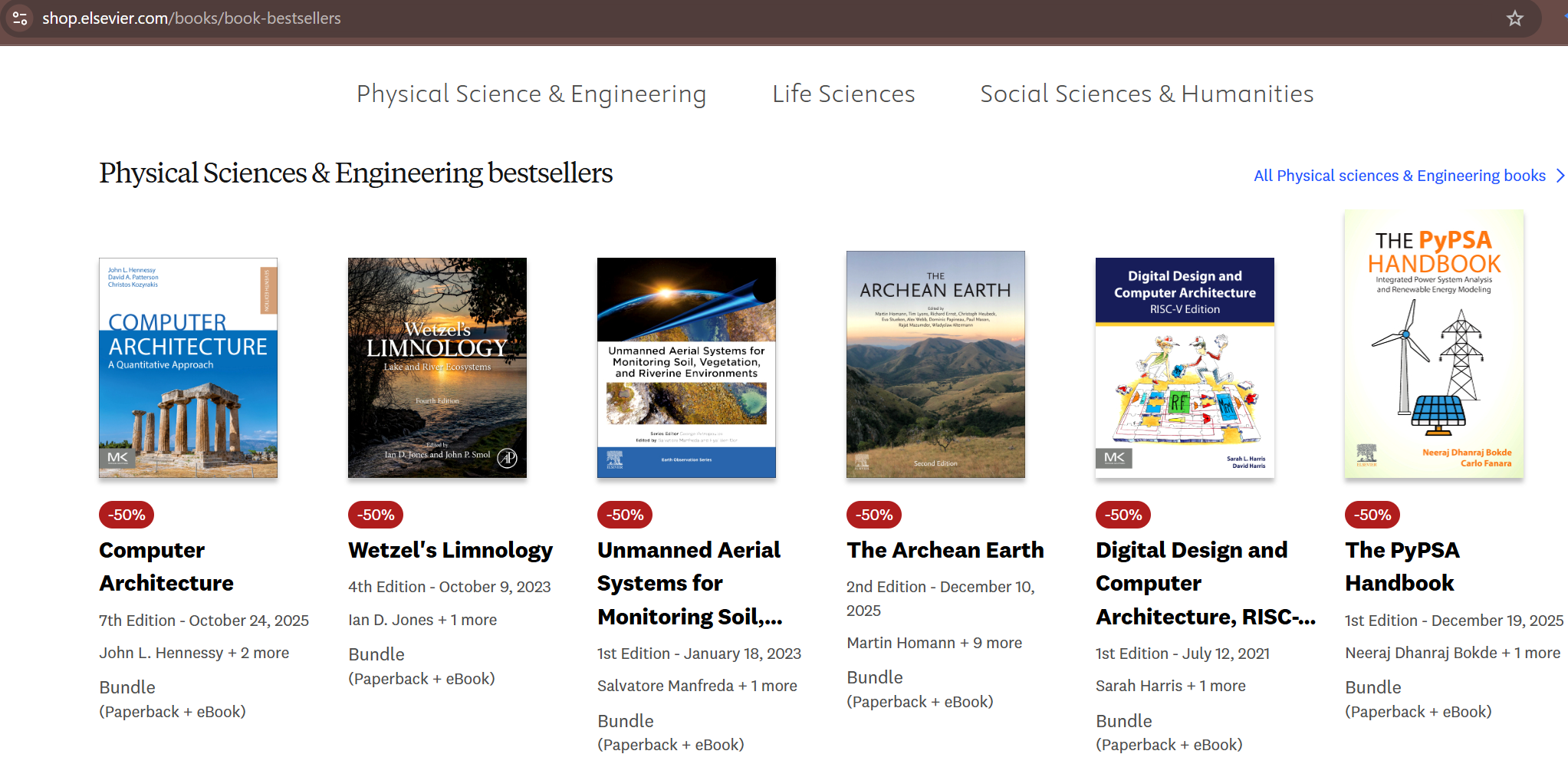 | The PyPSA Handbook is currently listed among Elsevier’s Physical Sciences & Engineering bestsellers. |
Where to Access the Book Permalink
The book is available through Elsevier’s official platforms:
ScienceDirect (institutional and library access): https://www.sciencedirect.com/book/monograph/9780443266317/the-pypsa-handbook
Elsevier Book Store (individual purchase): https://shop.elsevier.com/books/the-pypsa-handbook/bokde/978-0-443-26631-7
The handbook is available in both eBook and paperback formats, making it suitable for classroom use as well as individual reference.
If the embedded post does not load, you can view it directly on LinkedIn .
Why PyPSA? Permalink
PyPSA (Python for Power System Analysis) has rapidly become one of the most widely used open-source tools for modern energy system modeling. It enables detailed simulations of electricity networks, renewable energy integration, storage systems, grid expansion, and sector coupling within a transparent, flexible, and Python-based environment. Its reproducibility, scalability, and openness make it particularly well suited for academic research, utility planning, and national-level energy system studies.
What sets PyPSA apart is not only its technical versatility but also its widespread adoption across global institutions. It is used by international organizations such as the International Energy Agency (IEA), the Joint Research Centre (JRC) of the European Commission, and the Agency for the Cooperation of Energy Regulators (ACER). In India, PyPSA features in state government energy reports and studies by institutions such as The Energy and Resources Institute (TERI). It is also used by major energy think tanks like Ember and in industry-led modeling projects by companies including Saudi Aramco and Shell.
The academic adoption of PyPSA is equally strong. Universities and research institutes across the world apply PyPSA in teaching, theses, and peer-reviewed research, including Technische Universität Berlin, Karlsruhe Institute of Technology, Aarhus University, Technical University of Denmark (DTU), Stanford University, Chalmers University of Technology, TU Delft, University of Edinburgh, University of Pisa, University of Oxford, University of Geneva, University of Tromsø – The Arctic University of Norway, University of Oslo, Kyoto University, the Reiner Lemoine Institute, and the Center for Sustainable Energy Systems Flensburg, among many others. A continuously growing list of institutional users is maintained in the official PyPSA documentation available on official PyPSA documentation.
Beyond its technical capabilities and academic reach, PyPSA has also become increasingly relevant for energy-sector careers worldwide. Proficiency in PyPSA aligns closely with the skills required for roles in energy system analysis, grid planning, renewable integration, policy modeling, and energy consulting. This combination of methodological transparency, real-world relevance, and strong institutional adoption makes PyPSA particularly well suited for structured university courses as well as professional training and applied energy studies.
Why The PyPSA Handbook? Permalink
As PyPSA’s adoption expanded across academia, industry, and policy institutions, so did the demand for a clear and structured learning resource. While online documentation and community examples are valuable, they are often fragmented or tailored to narrow use cases. This made it difficult for new users to develop a systematic understanding, and for experienced users to rely on a single, stable reference.
The PyPSA Handbook was developed to address this gap. It is intended as both a reference book and a learning resource, supporting students, researchers, system planners, and professionals working in energy modeling and planning. The emphasis is on clarity, reproducibility, and practical relevance, allowing readers to move from basic concepts to advanced system studies with confidence.
Importantly, the book is written with formal teaching and training environments in mind, making it suitable for structured university courses as well as professional upskilling.
What’s Inside? Permalink
The book begins with the fundamentals: installing PyPSA, understanding its architecture, and modeling simple power networks. It then progresses step by step into more advanced topics such as dispatch and investment optimization, renewable and storage integration, long-term scenario analysis, and system reliability assessment.
Each chapter is designed to be self-contained, while also contributing to a broader modeling workflow. Hands-on examples, complete case studies, and real datasets are included throughout, allowing readers to directly run, adapt, and extend the models for their own applications. This structure makes the book equally suitable for semester-long courses, focused training modules, and independent study.
For University Courses and Teaching Permalink
The PyPSA Handbook is explicitly designed to support graduate-level university courses in power systems, renewable energy modeling, and energy system planning. The chapter structure, worked examples, and reproducible code make it well suited for use in Bachelor’s to PhD programs, as well as advanced elective courses.
Instructors can use the book to structure lectures, develop assignments, and design term projects based on realistic modeling problems. The progression from basic models to full system studies allows students to build both conceptual understanding and practical skills over the duration of a course.
Relevance for the Energy Job Market Permalink
Beyond academia, the skills developed through this book are directly aligned with the requirements of the global energy job market. PyPSA is increasingly used in roles related to energy system analysis, grid planning, renewable integration, policy evaluation, and consulting.
By working through the models and case studies in the handbook, readers gain hands-on experience with workflows that mirror real-world energy planning tasks. This makes the book particularly relevant for students and professionals preparing for careers in energy modeling, system planning, and data-driven decision support across utilities, think tanks, consultancies, and research organizations.
Course Design and Academic Support Permalink
I am always happy to support universities and instructors who wish to design or adapt courses around The PyPSA Handbook. This can include guidance on chapter sequencing, syllabus design, assignments, or project ideas, depending on the background and objectives of the course.
The book is intentionally flexible, allowing it to be used as a primary textbook or as a core reference alongside other materials. I am also glad to discuss how the content aligns with evolving skill requirements in the energy sector and how it can best prepare students for research and professional roles.
How to Cite the Book Permalink
If you use the book in academic work, teaching material, or reports, you may cite it as follows:
@book{BokdeFanara2025PyPSA,
  title     = {The PyPSA Handbook: Integrated Power System Analysis and Renewable Energy Modeling},
  author    = {Bokde, Neeraj Dhanraj and Fanara, Carlo},
  year      = {2025},
  publisher = {Elsevier},
  isbn      = {978-0-443-26631-7},
  doi       = {10.1016/C2023-0-51266-2}
}
With the book now published, we look forward to engaging more closely with the global energy modeling community, through course adoption, feedback from practitioners, and continued discussion around transparent and reproducible energy system analysis.
More updates will follow, including teaching materials, selected examples, and community-driven extensions. For now, we are excited to see The PyPSA Handbook being used in classrooms, research projects, and applied energy studies worldwide.
🔗 Official listing on Elsevier 🔗 Download the official flyer (PDF) 🔗 Full book cover (PDF)